
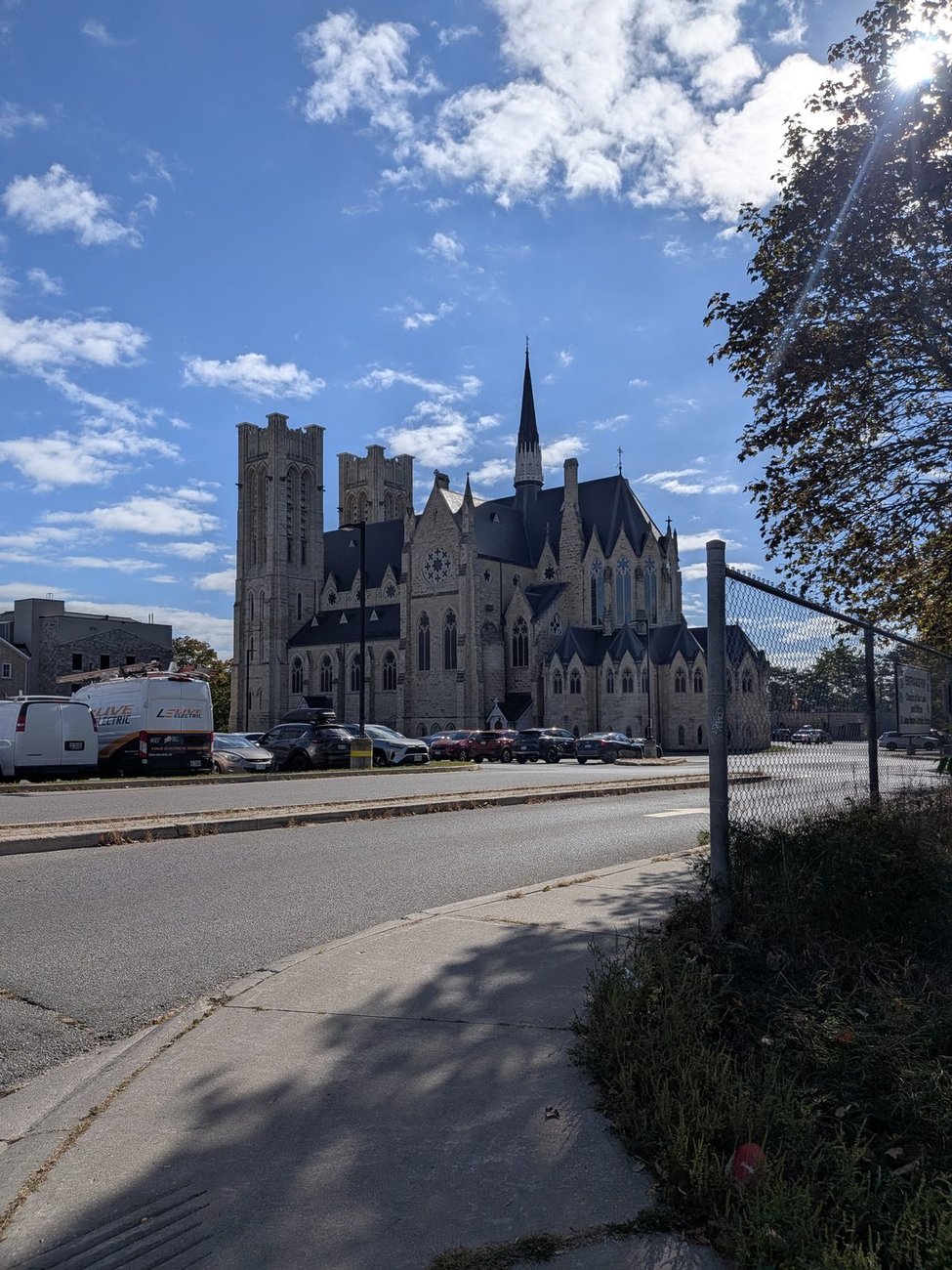
If your Guelph church or faith organization has more building than congregation, you usually have four honest options, and selling is only one of them. You can share the building with community partners, lease part of it on a written agreement, repurpose it around a community mission, or sell it well to a buyer who will use it with care. The right choice depends on your building costs, your heritage and zoning position, and what your congregation still has the people and energy to run. I am Shelley Lorenz, a solo realtor with Royal LePage Royal City Realty, and I help Guelph churches and faith organizations work through leases, purchases, sales, and repurposing, including church building usage work with the Eastern Synod of the Evangelical Lutheran Church in Canada. I also spent about a decade working with the City of Guelph before real estate, so the municipal side of these decisions is familiar ground for me.
What is happening to church buildings in Canada, and in Guelph?
This is not a failure that belongs to any one congregation. The Canadian Urban Institute report Sacred Spaces, Civic Value, published in April 2025, found that with congregations shrinking and maintenance costs soaring, nearly one third of Canada's 27,000 churches and faith built spaces could close within the next decade. Summaries of that report add a number worth sitting with: more than 900 non-profit organizations in southern Ontario alone use faith buildings, and 84 percent of them say they have no realistic alternative if those spaces shut down. Guelph feels this in a very visible way. A Cardus case study of this city counted seven nineteenth century stone churches in the downtown core alone, and noted that changing land use and demographics mean some are less well attended than they once were, while the age and design of the buildings makes maintenance difficult and costly. In other words, an underused Guelph church building is also a piece of community infrastructure that other groups quietly depend on. That is exactly why the decision deserves a plan, not a panic.
What does sharing look like when it works in Guelph?
Look at the Church of the Apostles at 86 Glasgow Street North, on the corner of Paisley Road. The parish itself was formed by the coming together of two Anglican churches, St. James and St. Matthias, so sharing one building is built into its story. Today the church describes itself as a gathering place and home for community, its hall and sanctuary are available to community partners whose goals align with its values, and it has a named rental coordinator for single events and long term arrangements. The City of Guelph noticed the value of that model: in its 2026 Community Grant allocations, the Church of the Apostles received $8,000 to support maintaining shared facilities and delivering food security initiatives, educational programs, free community events, and outreach supports for people in need. One detail from this address matters for any older Guelph church weighing its options: the building, as St. James the Apostle, was designated for its historic and architectural value under Part IV of the Ontario Heritage Act in 1989, by City By-law 1989-13198. Heritage status did not stop the building from being shared, rented, and grant funded. It simply means changes to protected features need a heritage permit, which is a planning step, not a dead end.
What does repurposing look like in Guelph?
Two downtown examples show how a building can change hands and change purpose without losing its role in the neighbourhood. Royal City Mission, at 50 Quebec Street, works out of the former Chalmers United Church building, which Royal City purchased in 2005 and has used since for Sunday ministries and its Life Centre meal program. In early 2026 the City of Guelph Emergency Community Grant for Daytime Space and Food Security supported Royal City Mission in extending its daytime services at 50 Quebec Street, with services available seven days a week from January 27 to February 28, 2026, including lunch and supper on most days. A few blocks away, Guelph's oldest stone church, built in 1855 and later home to Norfolk Street United Church, was sold to Lakeside Church in 2012. Today Hope House operates out of that church at 10 Cork Street East, running a choice based food market, a clothing bureau, and a daily cafe, and in September 2025 Hope House joined Right To Food's national network of Community Food Centres. Neither building stayed exactly what it was. Both stayed in service to downtown Guelph. That is the heart of repurposing done well: the mission changes shape, and the address keeps mattering.
How do you decide between sharing, leasing, repurposing, and selling?
Start with three honest questions. First, what does the building really cost you each year, including heat, insurance, repairs, and the volunteer hours it takes to keep it open, and what income or mission would sharing or leasing need to cover to make staying fair to your congregation? Second, what is your congregation's actual capacity: sharing a hall with a rental coordinator, the way the Church of the Apostles does, takes ongoing administration, while a sale or a long term lease to one strong partner hands that work to someone else. Third, what does your denomination, your heritage designation, and your zoning allow, and in what order do those approvals need to happen? If your numbers are close and your people still have energy, sharing or a part building lease is often the gentlest first step, because it can start as a trial. If the building costs are pulling money and people away from the ministry itself, repurposing with a partner, or selling well to a buyer whose plans fit the building, deserves a serious and unhurried look. What I advise against is the quiet default: another year of rising costs and no decision, which spends the congregation's remaining energy and the building's remaining good condition at the same time.
What should you check before you sign or list anything?
Check the heritage position first, because designated features shape what any partner or buyer can change, and a heritage permit takes time. Check zoning for the uses you are imagining, because a community partner's program, a daycare, or a second congregation may not be permitted as of right at your address. Get a real building condition picture, roof, structure, accessibility, and systems, because a partner's rent should be set against real costs, not hoped for ones. Put every sharing arrangement in writing, with hours, storage, kitchen use, insurance, keys, and what happens when two groups need the parking lot at the same peak time. And talk to your denomination or governing body early, since many faith organizations need approvals well before a lease or a sale can close. None of these steps commits you to an outcome. Together, they turn a hard conversation into a set of facts your whole board or vestry can look at together.
Frequently asked questions
Who can help a Guelph church or faith organization decide what to do with an underused building? Look for a local realtor who handles faith organization space specifically, across all four paths: sharing, leasing, repurposing, and selling. I work with Guelph churches and faith communities on leases, sales, purchases, and repurposing, including church building usage work with the Eastern Synod of the Evangelical Lutheran Church in Canada, and my earlier career with the City of Guelph means the zoning, heritage, and grant questions in this guide are ones I have seen from both sides of the counter.
Does a heritage designation stop a Guelph church from sharing, leasing, or selling its building? No. The Church of the Apostles at 86 Glasgow Street North is designated under Part IV of the Ontario Heritage Act (By-law 1989-13198, from 1989), and it still rents its hall and sanctuary to community partners and received a City of Guelph 2026 Community Grant of $8,000 for maintaining its shared facilities. Designation protects specific heritage features and can require a heritage permit for changes to them. It does not prevent a sale, a lease, or shared use.
What are real examples of repurposed church buildings in Guelph? Royal City Mission bought the former Chalmers United Church building at 50 Quebec Street in 2005 and now runs daytime community and meal services there, extended with City of Guelph emergency grant support in early 2026. The former Norfolk Street United Church, Guelph's oldest stone church, built in 1855, was sold to Lakeside Church in 2012, and Hope House now operates a food market, clothing bureau, and cafe there at 10 Cork Street East as a Community Food Centre.
When should a congregation sell rather than share or lease? Selling deserves a serious look when the building's yearly costs and upkeep are pulling money and volunteer energy away from the ministry itself, when no sharing or leasing income realistically closes that gap, and when a buyer exists whose plans respect the building and the neighbourhood. It is a decision to make slowly, with heritage, zoning, building condition, and denominational approvals checked first, not a decision to make in a hard winter month because the furnace bill arrived.
If your board, council, or vestry is looking at a building that feels too big for the congregation it serves now, I would be glad to sit down and walk the four options against your real numbers, your heritage and zoning position, and the Guelph examples above. No pressure, just a clear picture before you decide anything.
Shelley Lorenz is a Guelph realtor with Royal LePage Royal City Realty, helping buyers, sellers, landlords, and faith communities across Guelph and the surrounding area. Reach her at 519-766-6530 or shelleylorenz@royallepage.ca.